The Decision Table We Use
| Factor | Points to repair | Points to replace |
|---|
| Age | Under 8 years | 10 to 12 years or older |
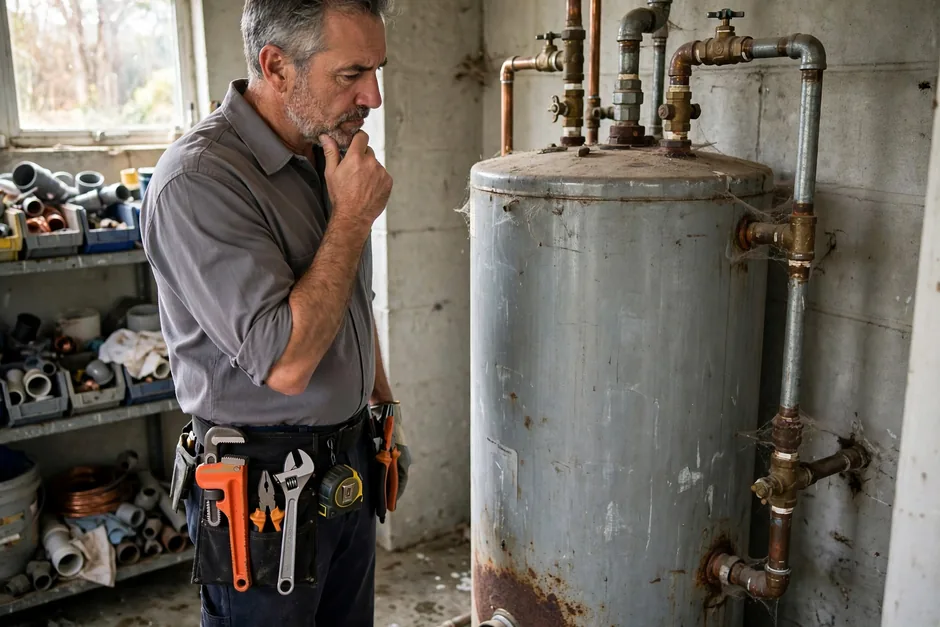
| Tank condition | No rust, no tank leaks, clean base | Rust at the base or fittings, any leak from the tank body |
| Fault type | Element, thermostat, valve, pilot assembly | Cracked or leaking tank, failed inner lining |
| Repair history | First real repair | Second or third repair in a short span |
| Performance | Hot water recovered normally after past service | Showers run lukewarm sooner each year despite service |
| Noise and sediment | Quiet, or noise cleared by a flush | Loud rumbling that returns right after flushing |
The Age Rule and Its Exceptions
Age alone does not condemn a heater. A well-kept nine-year-old tank with one failed element and no rust is a sensible repair. Age matters because every other risk rises with it: the anode rod that protects the tank is usually spent, sediment has had years to bake onto the bottom (see our guide on why water heaters make noise), and a tank leak at year twelve tends to arrive without much warning.
The one non-negotiable: a tank that leaks from its body cannot be repaired. Valves and fittings can leak and be fixed; the tank shell cannot. If water is coming through the tank wall or the base is rusted through, replacement is the only option, and speed matters because that leak grows.
When Replacement Is Also an Upgrade Decision
If replacement wins, you get one useful choice: another tank, or a tankless water heater. Tankless suits homes with high hot water demand and saves standby energy, but it needs yearly descaling in La Vergne water and a higher upfront investment. Homes in Heritage Valley replacing 1990s and 2000s era tanks and growing households in Lake Forest Estates ask about this most. We size either option to your household rather than selling the bigger box.